
Most money market players expect the Reserve Bank of India to keep key interest rates unchanged in its annual policy statement for 2005-06 (April-March), to be unveiled on April 28.
Global rating agency S&P forecast on Tuesday a slowdown in Indian economy to 8.6 per cent this fiscal due to high interest rates and appreciating rupee but expected no change in key rates and cash reserve ratio in RBI's credit policy on October 30. But the strong domestic demand would ensure that India maintains high growth. The moderation from last year's 9.4 per cent to 8.6 per cent this year therefore reflected a soft landing, S&P said in its mid-year review.
Liquidity is expected to remain comfortable this week, albeit the rate at which it is available may inch up rather than remaining below 1 per cent.
Aggressive buying towards the end saw the index zoom to a high of 15,569 - up 344 points from the day's low. The Sensex finally ended with a smart gain of 290 points at 15,551.
When interest rates rise, so does the EMI of your home loan. There are two ways in which you can deploy surplus funds to reduce the EMI. For maximum benefit, you can combine the two options.
Our financial system, by any reckoning, is fragile, which is why the RBI is intervening.

The global brokerage firm believes that CRR cut is likely to help cut lending rates and revive growth sentiments.

At Rs 30.88 lakh crore, the currency with the public is 71.84 per cent higher than the level for the fortnight ended November 4, 2016.

UCO Bank mulls AT1 offering to raise Rs 1,000 cr.

The RBI under former governor Shaktikanta Das resisted pressures to cut interest rates through 2024 as it kept its 'Arjuna's eye' trained on inflation, but the central bank under a new detail-oriented head will soon have to take a call if it can continue sacrificing growth. Das, a career bureaucrat who in 2016 oversaw Prime Minister Narendra Modi's highly disruptive demonetisation move, left a lasting legacy as he demitted office towards the end of 2024 after expertly navigating monetary policy for six years, the highlight of which was steering India's recovery through the pandemic.
The key short-term lending rate (repo rate)has been hiked by 0.25 pc to 7.50 pc.
Exiting income funds at this stage and booking losses might prove to be the perfect recipe for disaster.
The following are the highlights of the mid-term review of Monetary and Credit Policy for the year 2003-04.
Even as the market continued steady, key tech stocks slipped into the red after a solid start in the morning. But the market was held up by buying in Old Economy and defensive sector stocks.

Short-term lending rate unchanged at 7.75 pc.

'Revolving credit without full repayment causes interest to outpace repayment capacity, and leads to financial distress.'
However, fresh buying at lower levels helped the index recover all its losses by mid noon trades. A fresh round of buying in late trades saw the index surge to a high of 14,249 - up 518 points from the days low. The Sensex finally settled with a gain of 113 points at 14,220. The NSE Nifty ended with a gain of 60 points at 4,251.
After falling substantially in the previous week, inflation rose marginally by 0.06 per cent to 7.87 per cent for the week ended September 11 mainly due to costlier manufactured products including some edible oils.

Inflation target remains 5% for January 2017.

Once declared a dud stock, Suzlon has generated stellar returns for investors thus far this calendar year. On a year-to-date (YTD) basis, Suzlon's share price has doubled investor wealth by soaring 109.35 per cent on the bourses. By comparison, the benchmark BSE Sensex has gained just 11.2 per cent.

Amid liquidity tightness in the banking system, certificate of deposit (CD) rates topped 8 per cent for some smaller banks, with rates remaining on the higher side for derivatives loss-hit IndusInd Bank. On Thursday, CSB Bank raised Rs 100 crore via one-year CDs at 8.5 per cent, while Utkarsh Small Finance Bank issued three-month CDs at 8.05 per cent to raise Rs 50 crore.
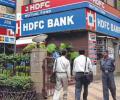
The Reserve Bank of India is likely to take a call on the relaxations sought by HDFC Bank in relation to the merger, as the date of merger draws closer, sources said. The HDFC twins, which announced their decision to merge in April last year, received National Company Law Tribunal's (NCLT's) approval recently - a key milestone to close the deal in due time. The management of both the entities had said that it will take 15-18 months for the merger.
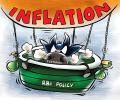
Amid a debate on the basis of a monetary policy stance, one may be curious enough to know how non-food retail inflation has behaved over the years in India. Let the eager souls catch a glimpse of facts. In the past 10 years, non-food inflation came down below 4 per cent on two occasions - pre-Covid period of 2019-20 and now in the first four months of the current financial year (FY25).

Breaking the streak of continuous fall in outstanding amounts, non-resident Indian (NRI) deposits rose for the first time in the financial year to $134.54 billion in October 2022. The figure was $133.67 billion in September. Reserve Bank of India (RBI) data showed that NRI deposits were in shrinking mode for the first six months of FY23. They fell to $133.67 billion in September from $139 billion in March.
.jpg)
SBI Chairman in the last year's banking conclave had started a debate by seeking to abolish cash reserve ratio to enhance liquidity in the banking sector for more productive use.

Growing concerns over slower-than-expected margin recovery, amid weak deposit growth have caught HDFC Bank's investors off guard. HDFC Bank's stock on Wednesday plunged nearly 9 per cent to hit an intraday low of Rs 1,527 on the BSE after reporting weaker-than-expected earnings in the third quarter (October - December) of the current financial year (Q3FY24). The shares of India's biggest private lender closed at Rs 1,536.9, down 8.46 per cent.
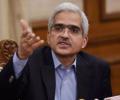
After hiking the repo rate by 0.50 per cent, RBI Governor Shaktikanta Das on Wednesday said future policy actions by the central bank will be guided by the evolving conditions. Addressing a press conference, the governor said the RBI has changed the policy stance to drop the phrase "remains accommodative", and instead opted for "withdrawal of accommodation" for guiding its future moves. The central bank did not hike the cash reserve ratio contrary to speculation, he said, adding that the liquidity withdrawal will be calibrated and measured.

'There are occasions when the prices of individual items like food raise inflation; then supply-side measures must be taken.' 'But if there is continued inflation, it means liquidity is aggravating the situation.'

The central bank was widely expected to maintain status quo.
HDFC Bank on Monday reported a consolidated net profit of Rs 16,811 crore for the September quarter, its maiden quarterly earnings announcement after merging parent HDFC with itself. On a standalone basis, the largest private sector lender reported a net profit of Rs 15,976 crore. In the year-ago period, the net profit of the merged entity would have been Rs 11,162 crore on a consolidated level while the same on a standalone basis would have been Rs 10,606 crore.

The use of RBI capital to strengthen public sector banks will have many positive implications for the economy -- and a few manageable downsides, points out R Jagannathan.

The banking system's liquidity slipped into deficit for the first time in the current financial year (2023-24) due to the imposition of the Incremental Cash Reserve Ratio (I-CRR) for banks and outflows from goods and services tax (GST) payments, according to dealers. Reserve Bank of India (RBI) data shows it injected Rs 23,644 crore on August 21. The last time liquidity was in deficit was on March 27, when the RBI injected Rs 45,575 crore.

Next bi-monthly policy statement on September 30.

State Bank of India (SBI) may carry out a planned Rs 10,000 crore sale of infrastructure bonds in the market this week, with the securities likely to be of 15-year maturity, sources told Business Standard. SBI, the country's largest bank, had last week said its board had approved the issuance of infrastructure bonds in the current fiscal year. It, however, had not mentioned the maturity of the bonds or when the sale would take place.

For over a decade, HDFC Bank consistently outperformed industry growth rates in both deposits and advances, maintaining impeccable asset quality. Amid a landscape where other banks struggled with soaring non-performing assets (NPAs), HDFC Bank thrived, eventually surpassing ICICI Bank to become the largest private sector lender in India. Its net interest margin (NIM) remained stable in the range of 4.1-4.4 per cent.

India Inc's cash pile was up 13.8 per cent last fiscal year, thanks to a combination of higher profits in sectors such as IT and fund raising by top companies such a Reliance Industries, Bharti Airtel and Tata Motors, among others.
The Reserve Bank on Monday said asset quality of banks improved further and their gross non-performing assets (GNPA) or bad loans ratio declined to a 12-year low of 2.6 per cent in September 2024 on the back of falling slippages and steady credit demand. The RBI also flagged concern over a sharp rise in write-offs, especially among private sector banks (PVBs), which could be partly masking worsening asset quality in unsecured lending segment and dilution in underwriting standards.

Highlights of RBI's third quarter review of monetary policy.
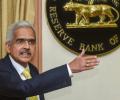
Financial markets are under stress and require steps by the central bank for market stability and revival of economic growth, he said while announcing the decisions taken by the Monetary Policy Committee in Mumbai.
